A Greek Designed 'Mini'
25 January 2026 - 3:30pm
 The name Sir Alexander Constantine Issigonis may mean nothing to most Greeks today, but the Anglo-Greek man had the distinction of being the designer of one of the most emblematic cars in the world, the BMC Mini. Launched by the British Motor Corporation (BMC) in 1959, the Mini was voted the second-most influential car of the entire twentieth century, second only to the Ford Model T, launched in 1908. The Mini went on to become the best-selling British car in history, with a production run of over 5.3 million cars. It was a groundbreaking design, with its front-wheel drive, transverse engine, sump gearbox, 10-inch wheels and incredible space efficiency. The beloved British Mini with its original design remained in production over 41 years until 2000, from the 'swinging 60s' until the millennium.
Alexander Issigonis was born on 18th November 1906 in Smyrna, Asia Minor. His grandfather Demosthenis, who had migrated to Smyrna from the island of Paros in the 1830s, had acquired British nationality. In September 1922, during the Great Fire of Smyrna and the massacre of Greeks by the Ottoman Turks, the Issigonis family were evacuated to Malta by the British Royal Navy since they were British subjects. His father, Constantine, died later that fateful year, and Alex and his mother moved to England in 1923.
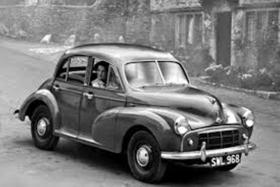
After university, Issigonis entered the motor industry as an engineer and designer, working for Humber. After racing with a supercharged 'Ulster' Austin Seven, later fitting it with a front axle of his own design, the gifted engineer landed a job at Austin. In 1936, Issigonis moved to Morris Motors Limited, working on various projects for Morris, and after the war he began work on an advanced automobile codenamed 'Mosquito' that would become his beloved 'Morris Minor' which was produced from 1948 to 1971.
Morris Minor 1950s Alexander Issigonis Morris Mini Minor 1960s
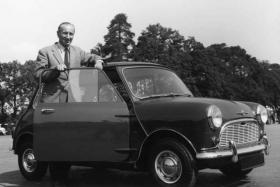
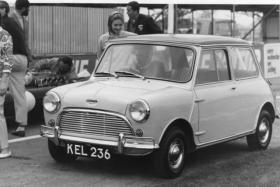
At the end of 1955, Issigonis was recruited into the British Motor Corporation (BMC) a merger of the Austin and Morris firms. He worked at the Austin plant at Longbridge, tasked with designing family and mid-sized automobiles. However, at the end of 1956, Issigonis was ordered to build a smaller car as quickly as possible as a result of the fuel rationing brought about by the Suez Crisis. By early 1957, prototypes of the revolutionary new vehicle were already in the making. In August 1959 the car was launched as the 'Morris Mini Minor' and the 'Austin Seven', which would become known as the 'Austin Mini'. During 1969, both cars would become simply known as 'The Mini', not just in Britain but throughout the world, as a motoring revolution and a fashion icon.
Austin 7 Mini 1960 'The Italian Job' film 1969 Mini Cooper S 1964
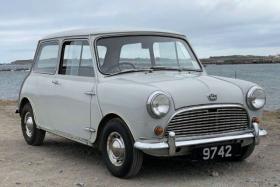
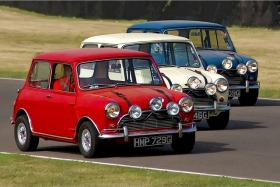
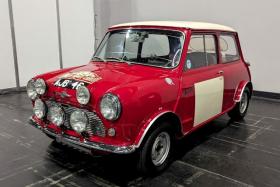
As part of the Queen Elizabeth II Birthday Honours for 1969, Issigonis was appointed a Knight Bachelor in recognition of his role as the Technical Director of British Leyland Motor Corporation Ltd., allowing him to be known as Sir Alexander Constantine Issigonis. 'Sir Alec', nicknamed 'the Greek god' by his contemporaries, officially retired from the motor industry in 1971. With his love of cars, he continued working until shortly before his death on 2nd October 1988, aged 81, at his home at Edgbaston, in Birmingham.
Austin Mini Countryman 1960s Morris Mini Traveller 1960s Mini Clubman Estate 1970s
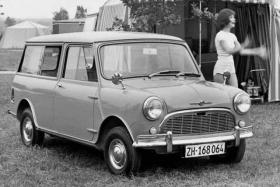
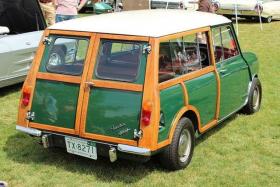
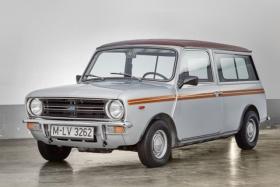
List of top influential cars of the 20th century
1) Ford Model T (1908-1927) 2) BMC Mini (1959-2000) 3) Citroën DS (1955-1975)
4) Volkswagen Beetle (1938-2003) 5) Porsche 911 (1963-present) 6) Ford Mustang (1964-present)
7) Volkswagen Golf (1974-present) 8) Toyota Corolla (1966-present) 9) Jaguar E-Type (1961-1975)
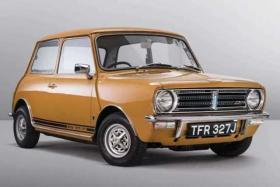
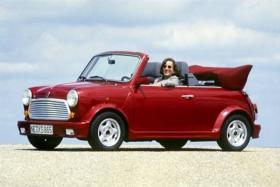
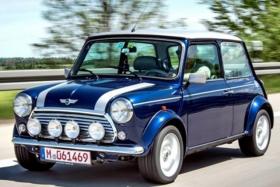
BLMC Mini 1275 GT 1970 Rover Mini Convertible 1993 Rover Mini Cooper Sport 2000