Greek 'Oxi Day' 1940
28 October 2026 - 11:00am
 Every 28th October, most Greeks around the world remember their country said "OXI" (No) to Mussolini in 1940. It is an annual national holiday in Greece and Cyprus, and all Greeks around the world observe the day that Greece rejected an ultimatum from Fascist Italy in the early hours of 28th October 1940, and the war and resistance that followed. Greece had remained neutral when the Second World War began, but by 1940 it was under real pressure. Mussolini's Italian army had already occupied Albania in April 1939. Then on 15th August 1940, the Feast of the Dormition, an Italian submarine called Delfini sank the Greek light cruiser Elli while she lay at anchor in Tinos harbour. Just after 03:00am on 28th October, the Italian ambassador handed Mussolini's ultimatum to the Greek Prime Minister.
The Italian ambassador, Emanuele Grazzi, demanded that the Greek Prime Minister, Ioannis Metaxas, allow Italian troops to enter Greece and occupy unnamed 'strategic points'. Greece had until 06:00am to agree. Metaxas replied in French, then the language of diplomacy, "Alors, c'est la guerre" (Well then, it is war). Italian forces crossed the Greek border at about 05:30am, before the unlimatum had even run out. Later that same day, the Greek newspapers were full of patriotic news regarding the famous reply by PM Ioannis Metaxas, which days later had taken the laconic term of 'OXI', with some early details of the Italian invasion of Greece.
Ioannis Metaxas Light Cruiser HS ELLI 1914-1940 Benito Mussolini
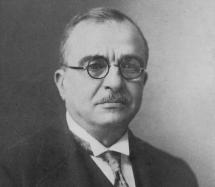
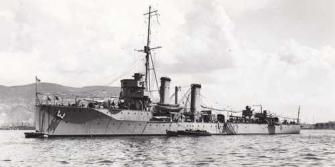
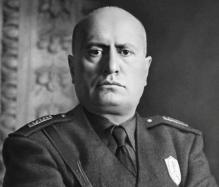
Prime Minister Metaxas had ruled Greece as a dictator since 4th August 1936, but his refusal that morning matched the mood of the country. 28th October 1940 heralded the Greek nation's entry into World War Two, but not with fear . . . as it was met with a spontaneous explosion of national unity and defiant patriotic fever, transforming political divisions into a single, unified will to resist.
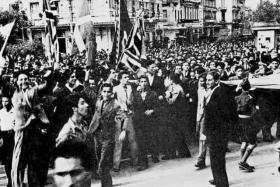
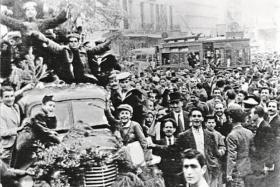
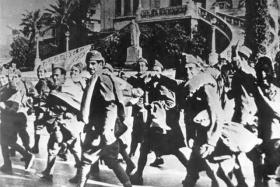
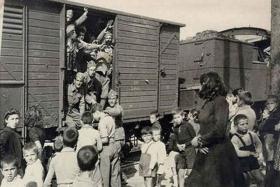
Citizens poured into the streets, turning the declaration of war into a fervent celebration of freedom. Reservists rushed to assembly points with ecstatic enthusiasm, waved off by massive crowds. The complex mobilization plan, which called up over 300,000 men in a few short weeks, was executed with astonishing speed. Ferries, railroad boxcars, buses and trucks overloaded with cheering patriotic conscripts departed for the Albanian front, streaming out of most villages, towns, mainland cities and her scattered islands.
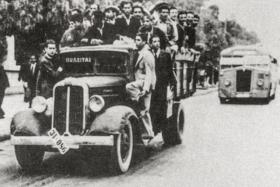
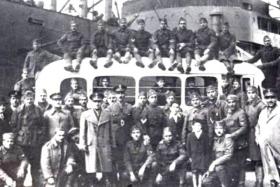
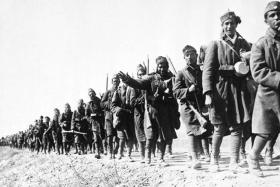
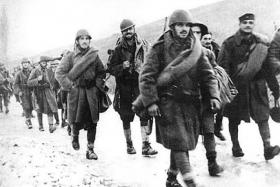
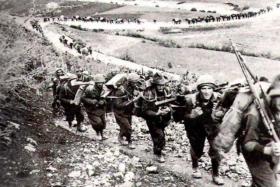
Fascist dictator and Italian Prime Minister Benito Mussolini had expected his vast army to have an easy campaign. What it got was hard fighting over a narrow front of rugged mountains with very few roads. In Epirus, Greek forces built their defence around the Kalpaki position and the marshy Kalamas river. In the north-east Pindus mountains, a small Greek detachment met the elite Julia Alpine Division. Greek reinforcements arrived, and by mid-November the Italian advance had been stopped and pushed back. The Hellenic Army counterattacked on 14th November 1940. Within days, the Italian invaders had been driven off Greek soil.
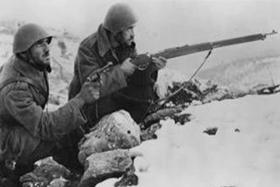
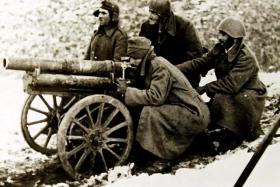
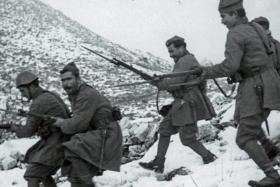
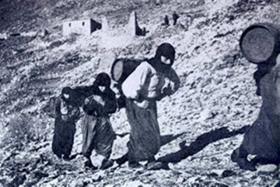
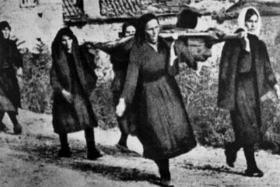
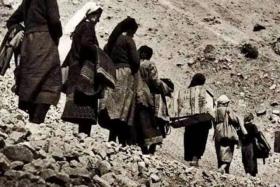
Fighting in the Albanian mountains throughout the winter of 1940-41 was brutal. Many soldiers suffered from frostbite, there were more frostbite cases than war casualties in the Hellenic Army, and Greek supply lines were stretched to breaking point. During the winter fighting, civilian support was essential and legendary. Villagers, particularly the women, spontaneously organised to ferry ammunition and food to the front lines, often transversing dangerous, snow-covered trails under harsh winter condition. In reality, this all-encompassing national effort was the true 'secret weapon' of the Hellenic Army in its winter fight against the Italian invader.
Greek Prime Minister Metaxas died in Athens on 29th January 1941, knowing his countrymen had freed its land of foreign invaders.