Parthenon Revealed
4 October 2025 - 8:00am
 On Saturday 4th October 2025, the ancient Parthenon temple, atop the Athens Acropolis, stands fully visible for the first time in nearly 20 years. Exterior scaffolding has been fully removed, marking the completion of a major phase in its ongoing restoration. The temple, a symbol of classical Greek architecture and culture, has been under conservation work since the early 2000s to preserve its marble structure for future generations. The scaffolding, removed in stages over the past few months, now offers an unobstructive view of the Parthenon's Doric columns and intricate friezes, will delight tourists, locals and historians. The restoration project addressed structural damage caused by centuries of weathering, pollution and past interventions, including repairs to the Parthenon's west façade and roof.
The iconic Parthenon was built between 447 and 432 BC and dedicated to the goddess Athena Parthenos (Athena the Virgin). It was constructed to replace earlier temples on the Acropolis destroyed during the Persian invasion in 480 BC. It was converted into a Byzantine church in the late 6th century and later became an Ottoman Turkish mosque in the mid-15th century. The central part of the Parthenon was destroyed in 1687 when a Venetian bomb ignited a gunpowder magazine located within the building. The Venetians then inadvertently smashed several sculptures while attempting to remove them as loot. In 1801-1803, Lord Elgin removed a large part of the surviving sculptures and transported them to Great Britain, presently housed in the British Museum.
After Greece gained independence from the Ottoman Empire, efforts were made to restore the Parthenon by the new Hellenic Goverment, but this original project proved to have caused further damage to the temple, particularly the problematic use of iron clamps and concrete in the restoration. In 1975, a multi-decade comprehensive protection and restoration project began to reverse the damage from the previous 19th century interventions and structural decay, by replacing all the corroded iron with titanium rods.
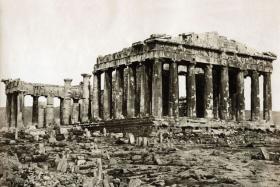
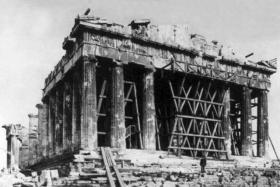
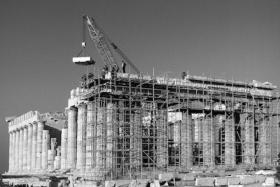
The temple's latest restoration project began in 1983 and intensified in the 2000s, but faced delay's due to lack of funding, technical complexities and the need to balance preservation with authenticity. Workers used advanced laser cleaning techniques and replaced damaged marble with new pieces from the same Dionysos quary used by the ancient buiders in the mid-5th century BC.
Dismantling the western scaffolding actually began in early July and was completed on 26th September, a symbolic date marking the anniversary of one of the darkest moments of the Acropolis' history, the 1687 Venetian bombardment. The Parthenon's exterior scaffolding removal marks the end of a significant phase, but minor renovation work will continue on this temple. The Parthenon temple will remain 'free' for about a month before new, lighter scaffolding is installed. Since the official start of the temple's restoration programme in 1975, this is the first time (even briefly) that the monument has stood completely without scaffolding.
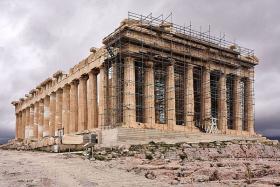
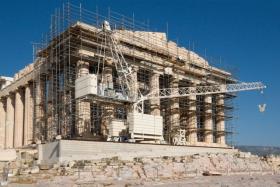
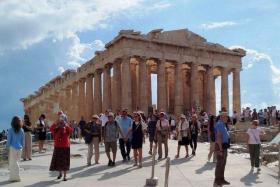
Work on the Parthenon is nearing its end. Work on the north and south walls, the east and west facades, including their triangular pediments, is drawing to a close. The final piece of this extensive restoration involves the completion of the west (front) pediment. Once the remaining ancient fragments and modern supports are carefully put in place, the scaffolding will be perminently removed.
The Hellenic government celebrated the Parthenon milestone with a ceremony at the Acropolis, attended by cultural officials and archaeologists. Plans are underway to further enhance visitor experiences, including improved accessibility and digital guides to educate the public about the ancient monument's 2,500-year-old history. The Athens Acropolis is a UNESCO World Heritage Site.
 UPDATE: On Thursday 18th June 2026 the restoration works on the western (front) pediment of the Parthenon and the permanent removal of external scaffolding from the monuments western façade were completed. For the first time in approximately 220 years, the western side of the Parthenon has returned to its fullest possible form with the placement of two new marble orthostats (from the original Dionysos quary) in the empty section of the pediment and the completion of restoration work on the backing wall that have now restored the architectural unity of the structure. The project demanded exceptional precision and dedication from all the scientists, engineers, craftspeople and staff of the Acropolis Restoration Service. Its successful completion demonstrates once again that Greece's restoration school remains among the world's leading examples.