Plight of Strays


Our journey began with helping GreekSTRAYS after our arrival to Greece, which was the start of our new life. Animal welfare certainly wasn't on our agenda. Our main objective was to start and find ways of working, to earn a living and enjoy the Mediterranean life. Little did we know at the time what we would become involved in. As most know, Greece has been described as one of the most beautiful countries within the Mediterranean, hot sun, blue skies, idyllic beaches, historical sites, and more. Sadly where animals are concerned, this is a far cry from reality. One can read through many newspapers about the horrors of animal welfare. It disturbs most tourists to the extent that they vow never to return. We ourselves have travelled through Greece and her islands for many years and have witnessed many horrible sights, but equally we have always fed and watered all the strays that crossed our path, and continue to do so now that we live here permanently.
Donations are hugely needed for GreekSTRAYS
Account name & bank: GreekSTRAYS - Lloyds Bank Sort Code: 30-65-22 Account Number: 78074260
PayPal: [email protected]

 The difference is when you permanently live in Greece or any Mediterranean country. As an animal lover, the sights witnessed are painful. Tears well up in your eyes. In some cases you are powerless to do anything. You know the animal will die. They are dumped in areas where there is absolutely no chance of any survival at all. The mountains are a prefect dumping ground, but without food and water, the poor creatures are doomed. Dead dogs and puppies are left on the roads for days on end. In towns and cities, dogs roam about searching for food and water, getting pathetically thinner and weaker and one feels that you cannot do anything to help. Food is put down, but the poor souls are too scared of humans, knowing what certain individuals can do to them, therefore they run away.

 It is the same story with cats and pregnant animals. To certain people the solution seems to be to "dump them" or "bin them". We get rid of our rubbish in bins and then this rubbish is taken to waste-tips. Over the years, we have rescued many new born animals, barely hours old from bins and some still with their unbilical cord attached. A while back, we were made aware of some puppies being outside a religious place. Upon investigation, and within a short period of time, these puppies had been binned! Beyond belief! Had we not seen a head peeping over the bin, then their chances of survival would have been non-existent. It is a never-ending story of hearing the plight of binned stray animals, kittens thrown into the sea or left in the hot blazing sunshine. It's really heartbreaking, as one cannot save all these abandoned stray animals.

 Very few cats and dogs have responsible owners in Greece, and most have a very short and miserable life. There are supposedly animal welfare laws, but sadly they are very rarely enforced. As a result, there are thousands of stray, sick and injured animals with no access to things that we take for granted in perhaps other parts of the world. Simple things like food and water, shelter and vaccinations against diseases would save so many lives, if only more people cared for these poor strays.
During the tourist season many animals survive thanks to some tourists, who feel sad at their plight, and feed them scraps. Around the tables in tavernas, there are pleading eyes looking up and begging for food. Some are lucky and do get a morsel, others might be shouted at, or even kicked away. But when the tourists leave, there is no regular food supply for the strays, therefore they eventually die of starvation or disease. Those that do survive are frequently poisoned, especially when important festivals are approaching. To many people, poisoning is just a 'natural' way of controlling stray animals, even though this is an illegal practice.
For many years there were no regional sterilization programmes, which would have improved the situation greatly. However, just recently the Ermionida Municipality appointed a municipality administrative vet, who has managed to organise a few regional neutering programmes for domestic and stray dogs and cats, supported by international animal charities and local volunteers. These recent events were carried out in Kranidi, offering free sterilization and neutering. Sadly, beyond these events, there seems to be little interest in the welfare of stray animals, either from the authorities or from the general public. This results in a constant flow of kittens and puppies to replace the dying adult population, so the annual cycle of new stray animals starts all over again.
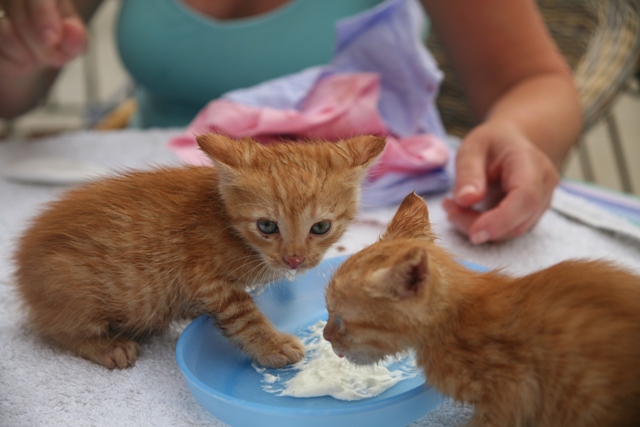
 The lack of vaccinations means that parvovirus and cat flu are very common, and parasite born diseases such as Leishmanisis and Ehrlrichia are prevalent, all being potentially lethal illnesses, especially in sick and starving animals. Animals suffering with any of these conditions will rarely be offered any veterinary care, as very few people bother to help them. The results are truly shocking. Even dogs which have owners are not treated as family pets, as in most of Europe. There are hundreds of dogs kept on short chains with no access to shelter, only kept as a cheap form of security alarm. The lucky ones do have food and water, but otherwise have a very miserable existence. Being from England, it is difficult for us to understand why certain people would want to even 'own' a dog, just to leave it constantly chained up and fed on scraps, or how living animals can be treated by some with such indifference or cruelty.
"Kindness is giving others happiness. Compassion is removing others bitterness. Joy is freeing others from suffering" - Buddha
Donations are hugely needed for GreekSTRAYS
Account name & bank: GreekSTRAYS - Lloyds Bank Sort Code: 30-65-22 Account Number: 78074260
PayPal: [email protected]